Búsqueda avanzada
Buscar
 

Entra en BiblioEteca...

Disfruta de todo el potencial de biblioEteca entrando con tu usuario...


NIETZSCHE'S THUS SPOKE ZARATHUSTRA (ANNOTED) (PURE WISDOM SERIES): GOD IS DEAD (ABSURD'S 'PURE WISDOM' SERIES BOOK 2) (ENGLISH EDITION)


AUTOR: ; ND
 
 
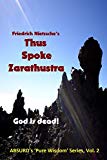
  • Portada de NIETZSCHE'S THUS SPOKE ZARATHUSTRA (ANNOTED) (PURE WISDOM SERIES): GOD IS DEAD (ABSURD'S 'PURE WISDOM' SERIES BOOK 2) (ENGLISH EDITION)

    B01LMIMCUE

 
Compartir: Compartir con un amigo de biblioeteca Compartir por email Compartir en Facebook Compartir Twitter Compartir en Tuenti Capturar código QR Añadir RSS

Sinópsis del libro:

  • ABSURD– a film and literary production house that is passionately committed to creating and appreciating the finest works of art and literature– has now introduced ‘Pure Wisdom’ Series that intends to be a collection of the greatest literature– fictions and nonfictions– that awakened and have still been awakening mankind. Wisdom is always pure, was it then really necessary to add and extra word ‘pure’ before the word ‘wisdom’? The answer is, ‘yes, it was’. By adding ‘pure’ before ‘wisdom’, ABSURD simply wants to put enough emphasis to confirm that it is stating about the literary works that are purified by the purest timeless wisdom.

    This is the second book of ‘Pure Wisdom’ Series; it collects one of the most important books for mankind ever written. The first book of this series contained two other finest literary works of all time- Franz Kafka’s novella, The Metamorphosis, and Hermann Hesse’s novel, Siddhartha.

    Friedrich Nietzsche was one of the greatest philosophers of all time. He was a rare breed, unlike many other philosophers whose philosophy was only of the mind, he was rooted deep in the heart– he was not only a philosopher but also a mystic– a born mystic. Hence, he was able to write a book like ‘Thus Spoke Zarathustra’– it was undoubtedly his best of the best philosophical and literary works. Nietzsche himself highly appreciated it in his preface to ‘Ecce Homo, How One Becomes What One Is,’ “In my lifework, my Zarathustra holds a place apart. With it, I gave my mankind the greatest gift it has yet been given. This book, the voice of which speaks out across the ages is not only the most exalted book on earth– literally the book of mountain air– the whole phenomenon mankind lies at an incalculable distance beneath it–but it is also the most profound book born of the inmost abundance of truth; an inexhaustible well into which no vessel can be lowered without coming up again laden with gold and with goodness. It is not a ‘‘prophet”who speaks here, one of those gruesome hybrids of sickness and will to power whom men call the founders of religions. One must pay attention to the tone–the halcyon tones– that fall from the lips of Zarathustra if one is not to do a great injustice to the meaning of the work….’’

    Zarathustra was almost forgotten, Nietzsche brought him back to the modern world significantly, and by doing that, as he wrote in the preface to ‘Ecce Homo,’ he delivered a great service to the humanity. Zarathustra was the founder of Zoroastrianism, which was the official religion of Persia, which is now Iran, and its distant subdivisions from 600 BCE to 650 CE. There were many founders or prophets of many religions, but why Zarathustra whom the world had nearly forgotten? Why had he chosen Zarathustra as his spokesman? Well, Nietzsche knew Zarathustra’s uniqueness, authenticity, and wisdom very well; unlike many other religions, Zarathustra’s religion was to appreciate and celebrate life totally and joyfully– life was not to be sacrificed for anything else– his religion was a celebration, not a suffering. What could be the point to suffer in life for something else in the future, for something that was not the reality but the poor calculation of the human mind? Hence Nietzsche loved Zarathustra’s idea of life and living very much. Zarathustra influenced him since he was very young. Nietzsche, in fact, grew up having Zarathustra in his mind all the time.

    Although the figure of Zarathustra and a large number of the leading thoughts in this work had appeared much earlier in the dreams and writings of the author, ‘Thus Spoke Zarathustra’ did not actually come into being until the month of August 1881 in Sils Maria; and it was the idea of the Eternal Recurrence of all things which finally induced Nietzsche to set forth his new views in poetic language.

    Idioma: INGLÉS


Clasificador

Según nuestros usuarios

RIGUROSO
Riguroso

Determina lo preciso o impreciso que es este libro con respecto a lo que se cuenta en el mismo. 0 significa que es completamente impreciso y 10 que cuenta es rigurosamente verídico

Más información
DIVERTIDO
Divertido

Determina lo divertido que te ha resultado el libro: 0-aburrido 10-muy divertido

Más información
COMPLEJO
Complejo

Determinamos lo complejo que nos ha resultado la lectura del libro. Desde el nivel más bajo, que indica que es un texto secillo de comprender hasta el valor máximo que indica que es complejo de comprender

Más información
SORPRENDE
Sorprende

Indica lo sorprendente que resulta el argumento del libro, desde 0: previsible hasta 10: totalmente desconcertante y sorprendente

Más información


Etiquetas de otros usuarios

Así han etiquetado este libro más usuarios

Así han etiquetado otros usuarios este libro. Si ves acertada su elección puedes añadir la etiqueta con un simple clic a tus etiquetas

 
Publicidad Baliza v16 Baliza v16


Comentarios de los lectores


Yo Leo

Información para lectores

Anillo de blogs

¿Tienes un blog?

Paga si te gusta

La forma de pago del futuro...

BiblioEtecarios

Ayudanos con los libros

Yo Escribo

Si eres autor, descubre más...

Ayuda

Todo lo que puedes hacer en la web
C/ Mayor, 50, 2C.
28921 Alcorcón (Madrid)
Tel/Fax : 91 288 73 76
E-mail : info@biblioeteca.com

BiblioEteca en Google Plus BiblioEteca en Rss

 
Copyright © 2026 BiblioEteca Technologies SL - Todos los derechos reservados