Búsqueda avanzada
Buscar
 

Entra en BiblioEteca...

Disfruta de todo el potencial de biblioEteca entrando con tu usuario...


MODERN SPANISH LYRICS


AUTOR: ; ND
 
 
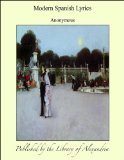
  • Portada de MODERN SPANISH LYRICS

    B00AR1A6P6

 
Compartir: Compartir con un amigo de biblioeteca Compartir por email Compartir en Facebook Compartir Twitter Compartir en Tuenti Capturar código QR Añadir RSS

Sinópsis del libro:

  • SPANISH LYRIC POETRY TO 1800 It has been observed that epic poetry, which is collective and objective in its nature, always reaches its full development in a nation sooner than lyric poetry, which is individual and subjective. Such is certainly the case in Spain. Numerous popular epics of much merit existed there in the Middle Ages.1 Of a popular lyric there are few traces in the same period; and the Castilian lyric as an art-form reached its height in the sixteenth, and again in the nineteenth, centuries. It is necessary always to bear in mind the distinction between the mysterious product called popular poetry, which is continually being created but seldom finds its way into the annals of literature, and artistic poetry. The chronicler of the Spanish lyric is concerned with the latter almost exclusively, though he will have occasion to mention the former not infrequently as the basis of some of the best artificial creations. Footnote 1: (return) The popular epics were written in assonating lines of variable length. There were also numerous monkish narrative poems (mester de clereçia) in stanzas of four Alexandrine lines each, all riming (cuaderna vía). If one were to enumerate ab origine the lyric productions of the Iberian Peninsula he might begin with the vague references of Strabo to the songs of its primitive inhabitants, and then pass on to Latin poets of Spanish birth, such as Seneca, Lucan and Martial. The later Spaniards who wrote Christian poetry in Latin, as Juvencus and Prudentius, might then be considered. But in order not to embrace many diverse subjects foreign to the contents of this collection, we must confine our inquiry to lyric production in the language of Castile, which became the dominating tongue of the Kingdom of Spain. Such a restriction excludes, of course, the Arabic lyric, a highly artificial poetry produced abundantly by the Moors during their occupation of the south of Spain; it excludes also the philosophical and religious poetry of the Spanish Jews, by no means despicable in thought or form. Catalan poetry, once written in the Provençal manner and of late happily revived, also lies outside our field

    Idioma: CASTELLANO


Clasificador

Según nuestros usuarios

RIGUROSO
Riguroso

Determina lo preciso o impreciso que es este libro con respecto a lo que se cuenta en el mismo. 0 significa que es completamente impreciso y 10 que cuenta es rigurosamente verídico

Más información
DIVERTIDO
Divertido

Determina lo divertido que te ha resultado el libro: 0-aburrido 10-muy divertido

Más información
COMPLEJO
Complejo

Determinamos lo complejo que nos ha resultado la lectura del libro. Desde el nivel más bajo, que indica que es un texto secillo de comprender hasta el valor máximo que indica que es complejo de comprender

Más información
SORPRENDE
Sorprende

Indica lo sorprendente que resulta el argumento del libro, desde 0: previsible hasta 10: totalmente desconcertante y sorprendente

Más información


Etiquetas de otros usuarios

Así han etiquetado este libro más usuarios

Así han etiquetado otros usuarios este libro. Si ves acertada su elección puedes añadir la etiqueta con un simple clic a tus etiquetas


Comentarios de los lectores


Yo Leo

Información para lectores

Anillo de blogs

¿Tienes un blog?

Paga si te gusta

La forma de pago del futuro...

BiblioEtecarios

Ayudanos con los libros

Yo Escribo

Si eres autor, descubre más...

Ayuda

Todo lo que puedes hacer en la web
C/ Mayor, 50, 2C.
28921 Alcorcón (Madrid)
Tel/Fax : 91 288 73 76
E-mail : info@biblioeteca.com

BiblioEteca en Google Plus BiblioEteca en Rss

 
Copyright © 2026 BiblioEteca Technologies SL - Todos los derechos reservados